Research Methodology
The Foundations of Quantitative Behavioural Analytics
Quantitative behavioural analytics is an interdisciplinary field that combines data science, psychology, and statistical modelling to study and predict human behaviour through measurable, numerical data.
By leveraging large datasets using advanced computation allgorithms, and tools, this approach seeks to uncover patterns, trends, and insights into how large groups act and make decisions. In an era defined by digital transformation and the proliferation of data, quantitative behavioural analytics has emerged as a powerful tool in finance.
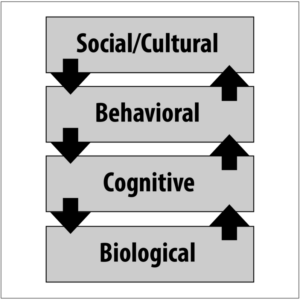


Quantitative Behavioural Analytics: Unveiling Human Behaviour Through Data
At its core, quantitative behavioural analytics relies on the systematic collection and analysis of behavioural data information that reflects what people do rather than what they say they do. Unlike qualitative methods, which focus on subjective experiences and narratives, quantitative approaches emphasize objectivity and scalability.
This is achieved by translating actions into numerical values that can be statistically analysed. The advent of super computing has supercharged this field.
The methodology typically involves several steps: data collection, preprocessing (cleaning and structuring the data), statistical analysis, and predictive modelling. Techniques such as machine learning are commonly employed to identify correlations.
Machine Learning
- We have written proprietary machine learning algorithms which run on the AWS Supercomputer infrastructure.
- The code generates entry and exit parameter sets which enable us to build long and short quantitative pattern matching models (locks & keys) for each portfolio component ie. combinations of entry and exit parameters.
- These historical patterns can be thought of as locks which need a matching key to “unlock”.
- All portfolio components exhibit either directional or mean reverting characteristics.
- Our machine learning algorithms have currently identified over 50 significant repeating patterns dependent on dominant cycle length and pattern complexity.
- The code typically ranks 2- 3 million combinations of entry and exit patterns for each portfolio component.